Digital Menu vs Printed Menu: Which Is Better for Restaurants
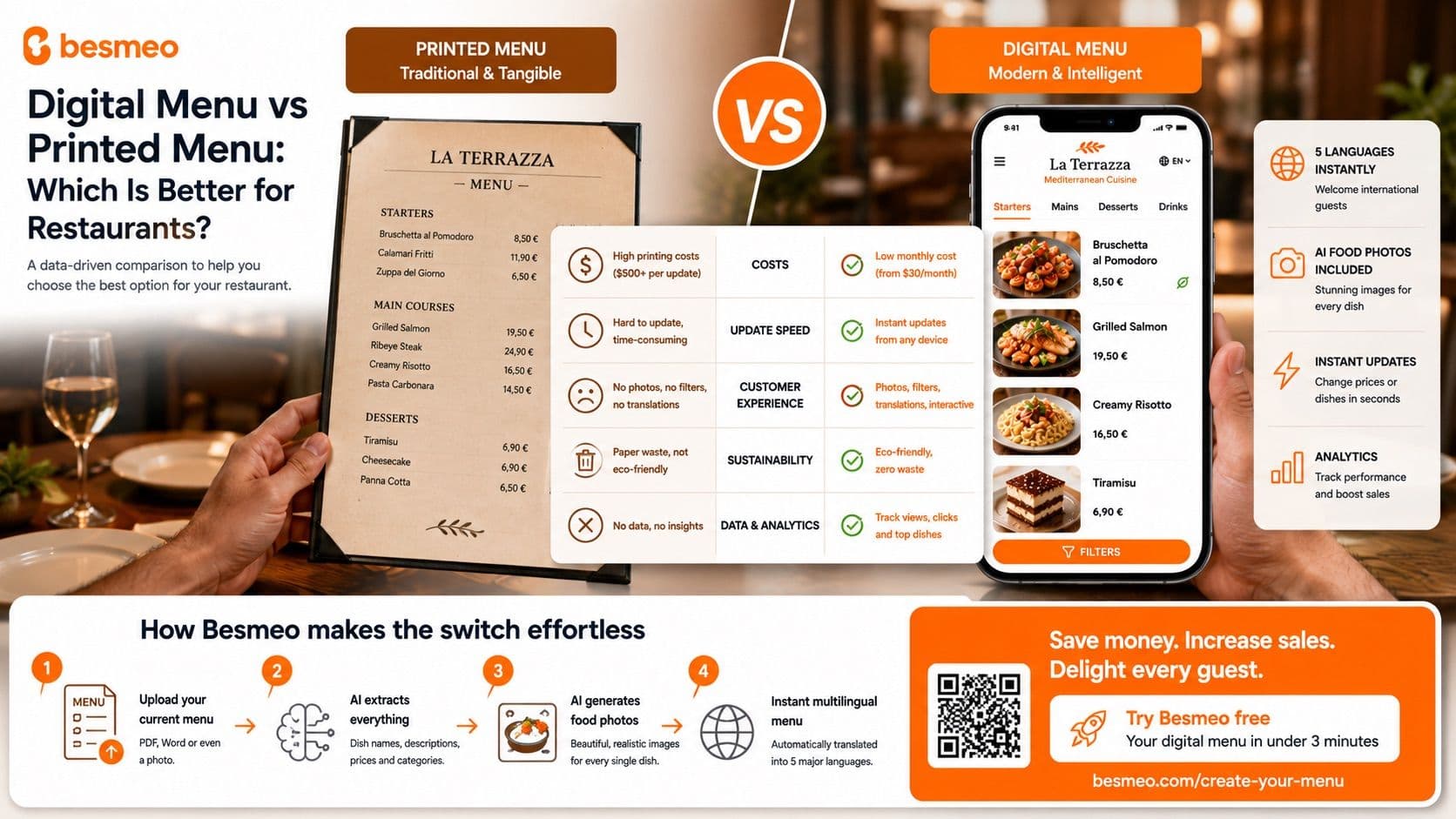
Digital Menu Vs Printed Menu: Which Is Better for Restaurants
For decades, the physical, printed menu was the undisputed centerpiece of the dining room experience. It was the heavy leather-bound folder in a steakhouse, the glossy tri-fold at the local diner, or the minimalist card stock sheet at a trendy downtown bistro. Restaurant owners spent thousands of dollars on graphic designers, premium paper textures, and specialized printing presses to ensure their menu made a premium first impression.
Then came the digital shift. What started as a chaotic, pandemic-era survival tactic has matured into a sophisticated technological standard.
Today, restaurant owners face a definitive fork in the road: Should you stick with the classic, tactile experience of a printed menu, or should you fully transition to a modern digital menu system?
This guide provides an objective, data-driven comparison of digital menu vs. printed menu setups. We will evaluate both options across five critical operational areas—cost, flexibility, customer experience, sustainability, and update speed—to help you make the right choice for your business.
1. The Financial Battle: Upfront Costs vs. Long-Term Maintenance
Every line item matters when you are managing restaurant margins. Let’s look at how the economics of print stack up against digital.
The True Cost of Printed Menus
Many owners mistakenly believe printed menus are cheaper because they lack a monthly subscription fee. However, paper menus carry heavy, recurring hidden costs:
- Graphic Design: A professional menu engineering layout costs anywhere from $300 to $1,000 per redesign.
- Printing and Lamination: High-quality, durable cardstock or laminated menus cost between $5 and $15 per unit. For a 60-seat restaurant, a single printing run can easily top $500.
- Wear and Tear: Paper menus get stained, torn, and water-damaged. The average casual dining restaurant has to replace 15% to 20% of its physical menus every single quarter just to maintain basic hygiene and presentation standards.
The Cost Structure of Digital Menus
Digital menus shift your marketing spend from a variable cost (printing every time things change) to a predictable, fixed operating expense.
- The Hardware: You print your high-quality table QR codes or signs once.
- The Software: A premium digital menu platform typically costs between $30 and $70 per month.
The Winner: Digital Menus. While printed menus seem cheaper upfront, the compounding cost of reprinting seasonal menus, updating prices due to food inflation, and replacing damaged stock makes digital infinitely more cost-effective over a 12-month period.
2. Update Speed and Operational Agility
In the modern hospitality landscape, agility is a superpower. Supply chain issues, ingredient shortages, and fluctuating wholesale food prices mean your kitchen needs to adapt in real time.
The Printed Menu Bottleneck
If a distributor suddenly doubles the price of your wholesale ribeye steak, a restaurant using printed menus faces a frustrating dilemma. Do you absorb the loss and destroy your profit margin? Do you cross out the price with a black sharpie marker (which looks incredibly cheap and unprofessional)? Or do you spend hundreds of dollars to reprint the entire batch of menus?
Furthermore, if your kitchen runs out of the daily fish special at 7:30 PM on a busy Friday night, your service staff must manually warn every single table before they order. If a server forgets, you have to deal with an annoyed customer and an awkward apology.
The Digital Menu Advantage
Digital setups give you total operational freedom. If you sell out of a high-margin item, you can open your dashboard on your smartphone, tap a button, and hide the dish instantly. The next customer who scans the QR code won't even know it was there, protecting your staff from unnecessary friction.
Price updates take less than 30 seconds. If ingredient costs spike, you can adjust your menu prices instantly to safeguard your margins. You can also test new recipes effortlessly: run a weekend special, track how it performs, and remove it by Monday morning without touching a single piece of paper.
The Winner: Digital Menus. There is simply no competition here. Real-time updates eliminate human error, protect kitchen margins, and save hours of administrative work.
3. Customer Experience and Table Dynamics
A menu is not just a list of food items; it is a psychological sales tool. How customers interact with your menu dictates exactly how much money they spend.
The Tactile Value of Print
Printed menus still hold a psychological edge in terms of pure tactile sensation. In high-end, fine-dining establishments, holding a heavy, textured, beautifully designed physical menu creates an immediate sense of luxury and ritual. It commands undivided attention. Customers put their phones away and focus entirely on the table conversation and the physical document in front of them.
The Interactive Power of Digital
While print wins on touch, digital wins on utility and engagement. A properly optimized mobile menu transforms the ordering process:
- Visual Aid: Physical menus rarely have photos because they take up too much space and look cluttered. Digital menus allow customers to tap a dish and view a stunning, high-resolution photo. Studies show that adding clean visuals to a menu increases order conversion rates by up to 6.5%.
- Smart Filtering: Customers with strict dietary restrictions (gluten-free, vegan, nut allergies) can filter out dishes they can't eat with a single click. On a printed menu, they have to squint at tiny font symbols or cross-examine their server.
- Multilingual Accessibility: For restaurants welcoming international tourists, a digital menu can detect the customer's phone language and translate the entire selection instantly. Printed bilingual menus are cluttered, bulky, and expensive to maintain.
The Winner: Tie. For Michelin-starred or traditional ultra-premium fine dining where the physical ritual is part of the brand, high-end printed menus remain vital. For casual dining, fast-casual, bisto, and tourist-heavy restaurants, the interactive utility of a digital menu delivers a far superior, higher-yielding experience.
4. Marketing Insights and Revenue Optimization
If you hand a customer a printed menu, walk away, and come back 10 minutes later, you have absolutely no data on their decision-making process.
The Blind Spots of Print
With a paper menu, you cannot track customer behavior. You don't know if they spent five minutes staring at your expensive seafood platter before panicking and ordering a basic burger. You don't know if they skipped the dessert section entirely because the text layout didn't grab their attention. You are essentially running your menu design on guesswork.
Data-Driven Gastronomy
Modern digital menus act as a built-in analytics engine. They track valuable, actionable customer data:
- Which sections (Appetizers, Mains, Drinks) get the most traffic.
- Which specific dishes are clicked on frequently but rarely ordered (indicating a problem with the description or the price point).
- What percentage of your weekend crowd consists of foreign tourists utilizing specific language toggles.
This data allows you to perform precise menu engineering. If you notice a high-margin cocktail is buried at the bottom of the page and getting zero views, you can move it to the top of the digital screen instantly and track the immediate lift in sales.
The Winner: Digital Menus. You cannot optimize what you do not measure. Digital menus give you the business intelligence required to maximize your kitchen's profitability.
5. Sustainability and Environmental Impact
Modern consumers—especially younger demographics like Millennials and Gen Z—actively prefer supporting businesses that demonstrate environmental responsibility.
The Wastefulness of Paper
The constant cycle of printing, laminating, discarding, and reprinting menus creates a massive amount of physical waste. Laminated paper menus cannot be easily recycled, meaning hundreds of pounds of plastic-coated cardstock from your restaurant end up in landfills every single year.
The Green Footprint of Digital
Transitioning to a QR code menu entirely eliminates your restaurant's paper waste footprint. You print durable, elegant wood, acrylic, or metal QR plaques for your tables once, and your physical waste drops to zero. It’s an easy, authentic marketing win you can share with your community to showcase your green business practices.
The Winner: Digital Menus. Digital is the undeniable choice for any eco-conscious restaurant owner looking to reduce their carbon footprint and save trees.
The Verdict: Digital Wins, But the Transition Used to Be Hard
When you look at the cold, hard data, digital menus outperform printed menus in almost every metric. They lower your long-term costs, allow you to adapt your prices instantly, provide rich behavioral data, protect your margins, and save the planet.
So, why are some restaurant owners still holding onto old-school paper menus?
The answer usually comes down to friction. Transitioning to a digital platform historically meant spending hours manually re-typing every single dish description, inputting allergen data, configuring complex layout builders, and chasing down high-quality photos. For a busy operator, that feels like a full-time job.
Enter Besmeo: The Effortless Bridge from Print to Digital
This is exactly why Besmeo was created. We believe you shouldn't have to choose between the operational power of a digital menu and your own limited time.
Besmeo completely eliminates the setup friction by turning your current printed menu into a state-of-the-art digital experience automatically.
Here is how simple it is:
- Upload Your Current Menu: Take your existing printed menu PDF, a Word document, or even a clear photo of your paper menu, and upload it to Besmeo.
- Zero-Design Automation: Our advanced AI parses the document, instantly extracting all your dish names, descriptions, and pricing structures. You don’t have to type a single word or build any layouts.
- Instant AI Food Photos: Don't have professional food photos? Besmeo's built-in culinary AI automatically generates beautiful, realistic, studio-quality images for every single dish based entirely on your descriptions.
- Instant Multilingual Launch: Your new digital menu is automatically translated into 5 major languages right out of the box, ready to capture international tourist sales with pinpoint gastronomic accuracy.
You don't need design skills, technical expertise, or a big budget. In less than 3 minutes, Besmeo takes your traditional printed menu and gives you all the cost-saving, revenue-driving power of a modern digital ecosystem.
Ready to stop wasting money on printing presses and start scaling your margins?
[Upload your current menu PDF to Besmeo right now and preview your live digital menu in under 3 minutes for free →